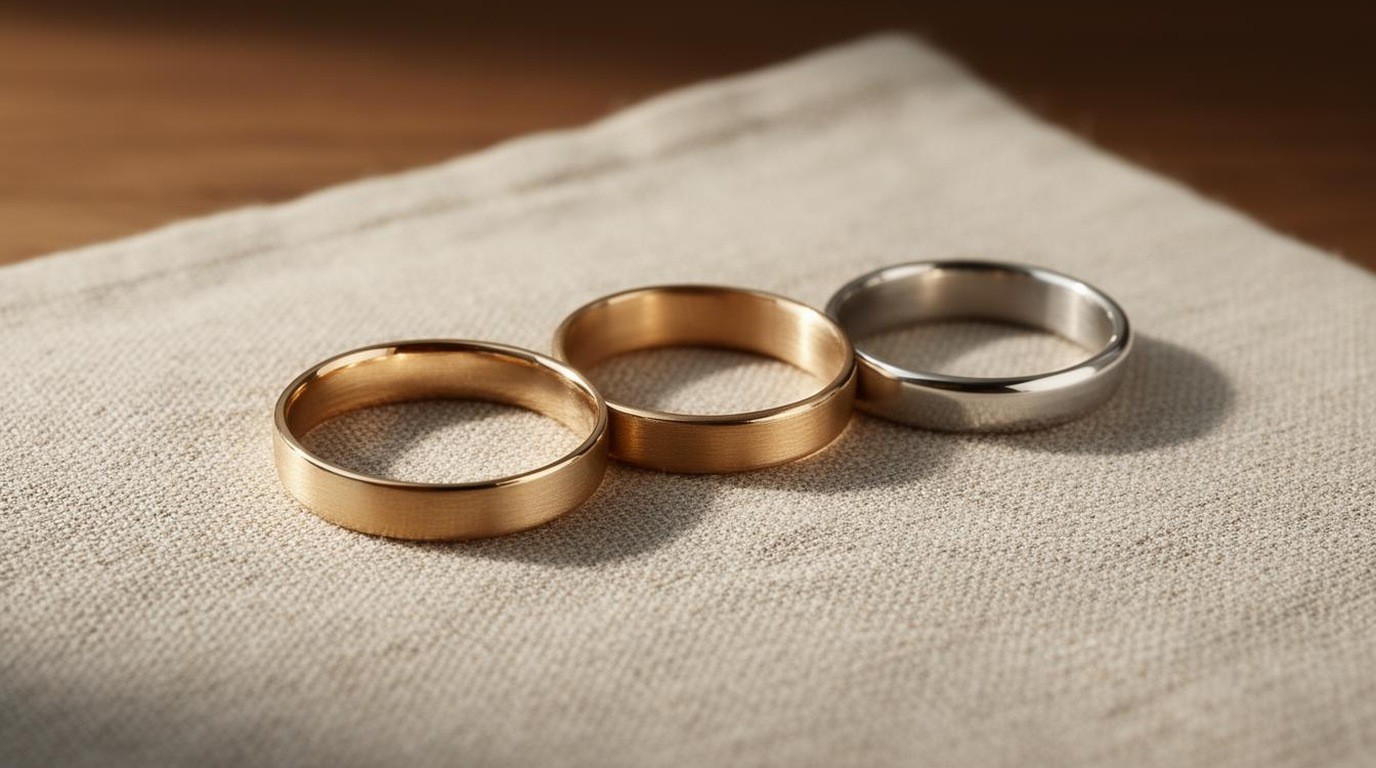
The metal in a ring is the part of the piece that touches the hand every hour of every day. It takes the knocks from doors and keyboards, it shows the wear of years and it decides how the stone sits and how the color of the piece will change with age. Choosing the metal is less about fashion than about what the ring will be asked to do.
This guide explains the main ring metals, how karat and alloys change their color and durability, what platinum and palladium offer and how to think about the cost and upkeep of each. It is about the material, not the value of any particular piece. Metal prices change, and a jeweler or appraiser can explain the current figures for a specific purchase.
A buyer picks a platinum ring for an everyday wearer who has always preferred yellow gold. The ring is lovely, but it is not the piece she reaches for.
What karat means
Gold is measured in karats, which describe how much of the metal is pure gold in the alloy. Pure gold is 24 karat, and it is too soft for most jewelry. Common jewelry grades include 18 karat, which is 75 percent gold, and 14 karat, which is about 58 percent. The rest of the alloy is other metals such as copper, silver and zinc, and their proportions affect color and hardness.
Higher karats are richer in color and softer. Lower karats are harder and more durable, though they can look paler. A 14 karat ring is often a practical choice for everyday wear, while an 18 karat ring has a deeper, warmer color that many people prefer for special pieces. Check the karat stamp inside the band, and ask the jeweler for the exact alloy if you want to know more.

Yellow, white and rose gold
Yellow gold is the traditional choice. Its color comes from the gold and the alloy, and it does not change with wear, though the surface can scratch. Yellow gold is soft enough to be shaped easily and hard enough for daily wear when the karat is chosen well.
White gold is an alloy that is usually plated with rhodium to give a bright, silver-white finish. The plating wears over time, and the ring may need re-plating every few years to keep its white look. Underneath the plating, the color is slightly yellow in many white golds. Ask the jeweler whether the ring is rhodium-plated and how often it will need attention.
Rose gold gets its color from copper in the alloy. It is warm and romantic in color, and the amount of copper determines how pink it looks. Rose gold is durable and, like yellow gold, does not need plating.
Platinum and palladium
Platinum is a dense, naturally white metal that is often used for high-end rings. It is heavier than gold, and it develops a soft patina over time, a slight change in color that some people love and others prefer to have polished out. Platinum is strong, and it holds prongs well, which matters for settings that secure stones.
Palladium is a member of the platinum family, lighter than platinum and naturally white. It is often less expensive than platinum and can be a good option for those who want a white metal that does not need plating. Ask whether the palladium is an alloy, and how the jeweler expects it to age.
Silver and other metals
Sterling silver is an alloy that is affordable and bright. It tarnishes over time, and it is softer than gold or platinum, so it scratches and bends more easily. Silver can suit fashion pieces and occasional wear, though it is less suited to a daily engagement or wedding ring.
Stainless steel, titanium and tungsten carbide are used in some rings. Each has different hardness, weight and resizing limits, and each needs care. Check how the ring can be resized and whether the metal can be repaired.
Durability and daily wear
For a ring worn every day, consider how the metal handles scratches and dents. Gold and platinum are both durable, and their wear is different. Gold loses small amounts of metal through abrasion over the years, while platinum displaces metal, creating a patina without losing weight. Neither is damaged by normal wear, but both benefit from professional polishing and checks on the prongs and settings.
The setting matters as much as the metal. Prongs should be checked regularly for wear, and the stone should sit securely. A jeweler can inspect the setting for you. We do not give repair instructions for settings, since stone security is a matter for a professional.
Maintenance and cost
The metal affects maintenance. White gold needs re-plating, platinum benefits from polishing and silver needs cleaning to remove tarnish. Gold needs little more than cleaning and an occasional check. Ask the jeweler how often the ring should be serviced and what each service costs.
Metal prices change over time, and the cost of a ring includes the metal, the labor and the setting. Ask for a breakdown when you buy, and compare the metal content and karat with other quotes. We do not give current metal prices or investment advice.
Matching the metal to the wearer
Think about the wearer’s skin tone and style. Some people find yellow gold warm and flattering, while others prefer the cool brightness of white metals. Consider whether the wearer has a preference for patina or polish, and whether they are likely to keep a ring for decades. If the ring will be worn daily and works hard, a durable metal with a sensible karat is usually the right choice.
Consider how the metal pairs with the stone. A white stone can look brighter against white metal, while a yellow tint in some stones can be more visible in yellow gold. Look at the stone in the setting before deciding.
Questions to ask
- What is the karat or alloy, and is it stamped inside the band?
- Is the white metal rhodium-plated, and how often will it need re-plating?
- How will the metal age, and what servicing is recommended?
- Can the ring be resized, and does the metal allow it?
- What does the setting need to stay secure, and how often should it be checked?
Our guide to the four Cs covers the stone side of the decision, and our guide to budget jewelry that looks expensive shows how metal and finish work in lower-priced pieces.
The short version
Karat and alloy decide the gold’s color and hardness. White gold needs re-plating, platinum develops a patina and palladium is a natural white metal. Silver is affordable but softer, and other metals suit specific needs. Choose the metal for the wearer’s daily life, check the setting and ask the jeweler about aging, servicing and resizing before you buy.
Common metal mistakes
- Choosing a metal from a photo without seeing it in daylight.
- Ignoring the metal’s maintenance needs for a ring worn every day.
- Forgetting to check whether the ring fits the wearer’s hand.
- Assuming all gold of the same karat looks identical.